5 Steps to Create Your Own Oracle Card Deck
Do you LOOOOOVE working with oracle cards? Have you been dreaming of making your own deck—but you have no idea where to get started?
Here are 5 steps to guide you along your journey of turning your vision into a finished physical product you can hold in your hands and share with the world!
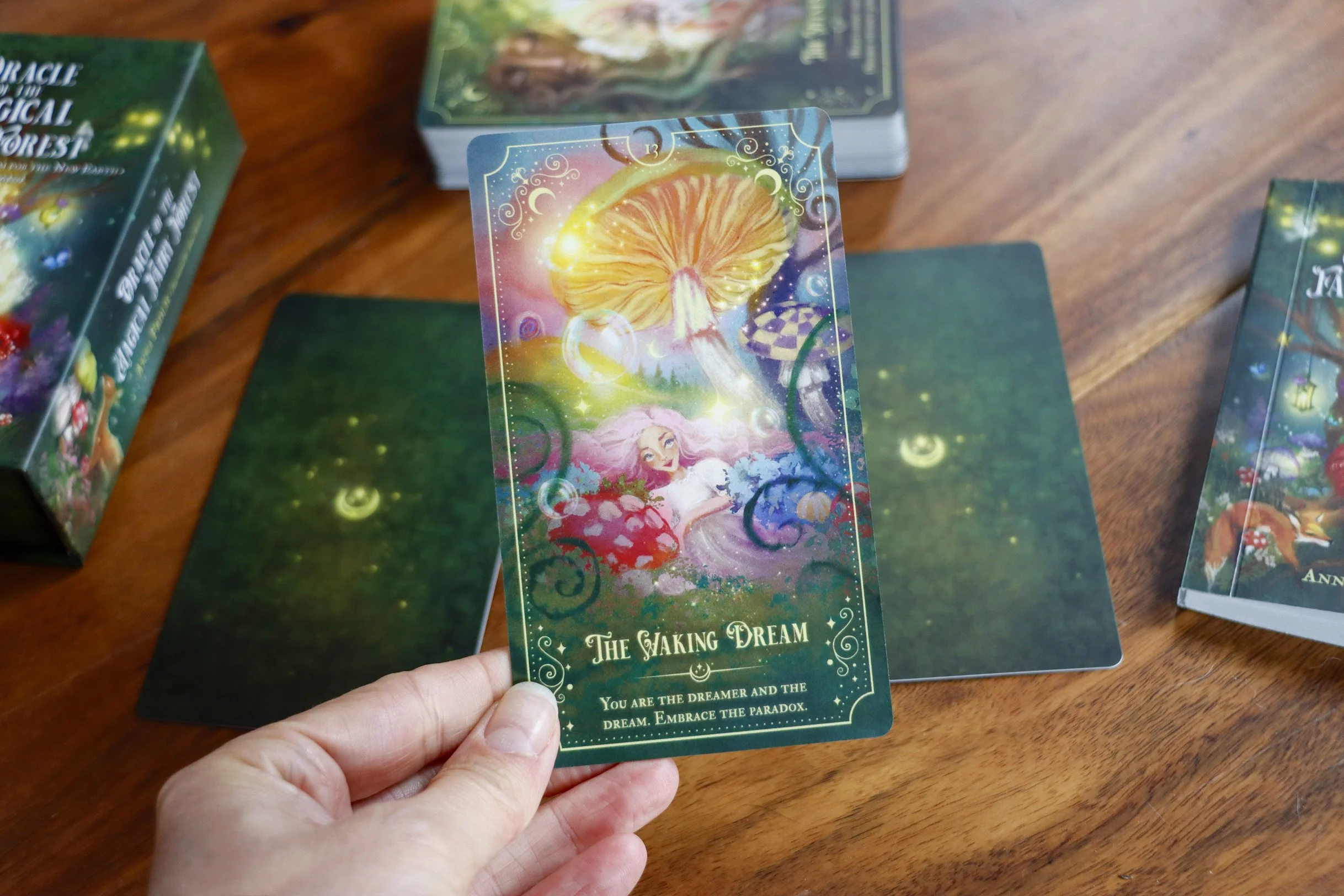
The Oracle of the Magical Fairy Forest by Anna Frolik, illustrated by Anna Babich (card #13, the Waking Dream).
Step 1: Map Out Your Vision for Your Oracle Deck
Before you start creating your card deck, outline a clear vision for your product.
What is the theme of your deck? Who are you creating it for? How will your cards benefit your ideal customer? What will your deck look like physically? For example, how many cards will it include, and what’s your preferred card size? What kind of artwork are you envisioning? Will your deck come with a guidebook, and will it be packaged in a specific kind of box? Will your cards be glossy, matte, or adorned with any special finishes such as metallic foil or gold edges?
The more clear your vision is, the more smoothly your creative journey will unfold, and the easier it will be to reach your ideal audience of excited customers who can’t wait to get their hands on your oracle deck—and recommend it to their friends, too!
Step 2: Write Your Content
Next, it’s time to create the content for your oracle deck. I always recommend having your content ready in its most final, edited form before you start designing your deck—especially if you’re collaborating with a graphic designer.
But even if you’re designing your deck yourself, preparing your content ahead of time will help you create a clear structure for your project before you start your design phase, and you’ll save yourself and your team unnecessary editing rounds later.
It’s often easiest to begin with the content for your cards. Then, write your guidebook if you’re including one. And finally, don’t forget to prepare all the little pieces of content for your box and booklet cover, such as your title, subtitle, blurb for the back of your box, and all the legal information that needs to be there.
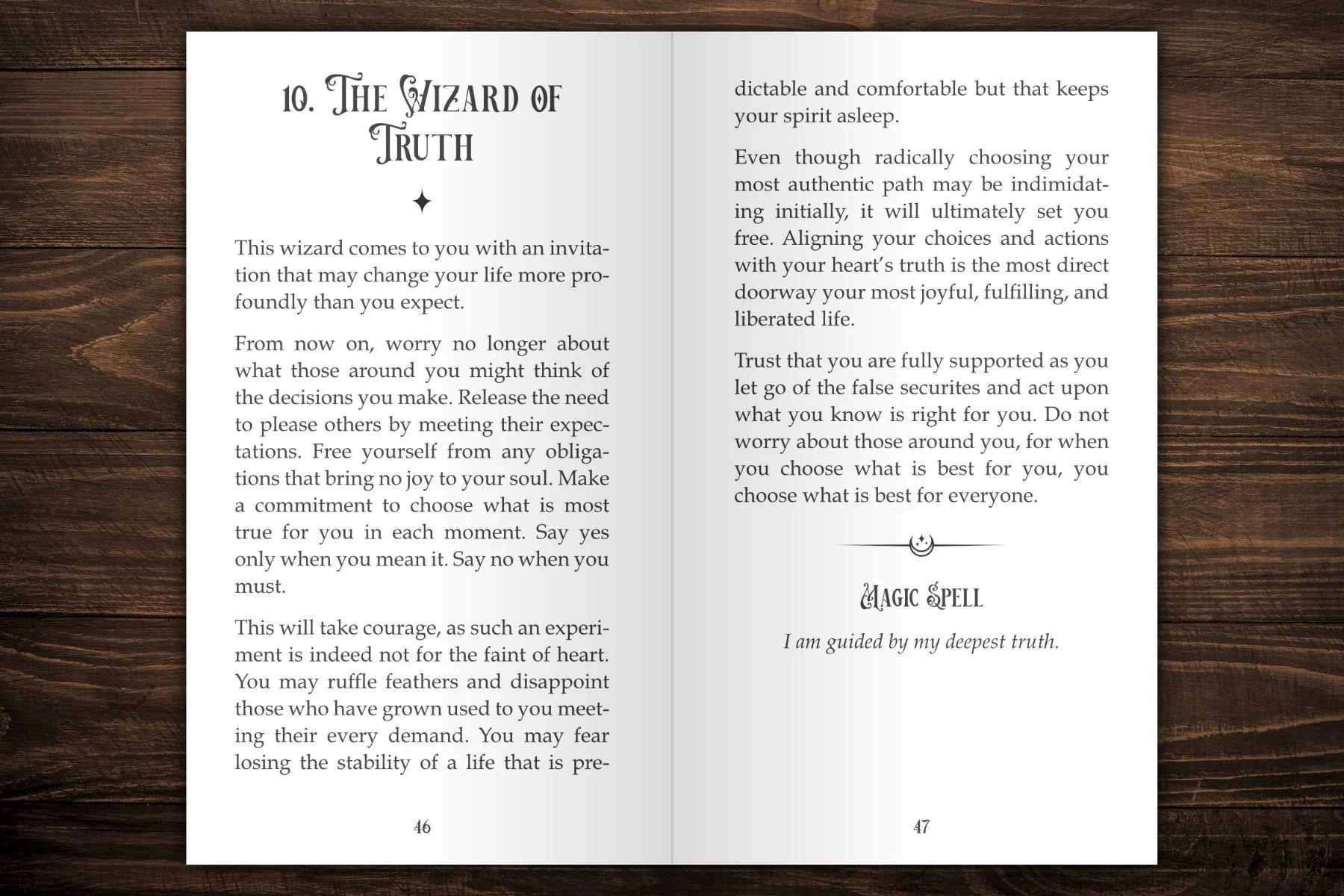
Sample guidebook spread from the Oracle of the Magical Fairy Forest (the Wizard of Truth).
Step 3: Design Your Card Deck
Once your content is ready, the journey of designing your card deck begins!
If you’re designing your deck yourself, this is the moment to decide how you’re going to source your art. For example, if you’re a professional artist, you may want to paint your images by hand or design digital illustrations using a software like Procreate.
You could also purchase pre-made images or art sets from a stock site like Creative Market and design your layouts in a graphic design software like Photoshop, Affinity, of Canva. (Make sure you have the proper licenses for using the images for a printed card deck.)
If you don’t consider yourself and artist and don’t have a good eye for design, collaborating with a professional illustrator and/or graphic designer can be a beautiful and FUN way to create a stunning product that stands out from the crowd and speaks to an audience of customers who value professional quality and original art.
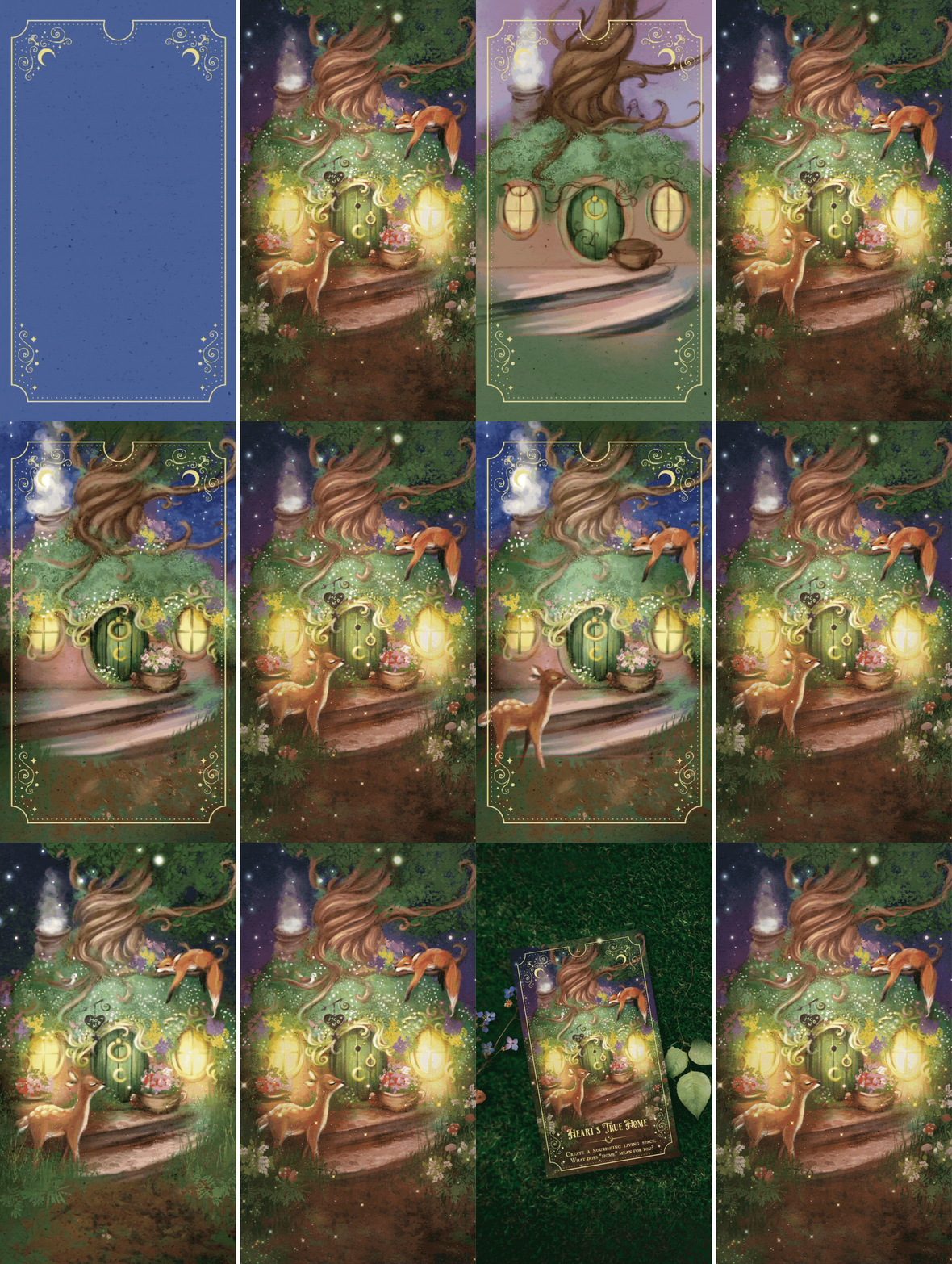
Card illustration time-lapse showing the process of illustrating the Oracle of the Magical Fairy Forest (card #4, Heart’s True Home).
Finally, a word about AI: While generative AI tools are getting better and better at quickly creating images in any style one could imagine, it may not be the way to go if you’re concerned about potential copyright issues—or if you’re speaking to an audience that values human creativity and can easily spot AI generated art.
For instance, if you’re launching your deck on Kickstarter, you’ll likely miss out on a certain percentage of pledges if your deck is labelled as AI generated (which is mandatory on Kickstarter).
Step 4: Choose Your Publishing Method
Before you send your deck to the printer, it’s important to decide how you’re going to publish your deck. Do you prefer to self-publish your cards, or are you thinking about submitting your deck to a traditional publisher? Perhaps you’re even considering a hybrid option that includes elements of both?
Self-publishing your oracle card deck is the ideal choice if it’s important to you to remain in control of your creative process and keep all your rights and sales profits. It’s also the fastest way to get your deck produced and out into the world.
Working with a traditional publishing house may be the better fit if you’d rather have a publisher produce your deck and handle all the logistics for you. Finding a publisher can be a long, time-consuming process with no guarantee of success, and you’ll only receive a small percentage of your deck’s sales.
If you plan on self-publishing, now is the time to get your ISBN number and/or UPC barcode(s) for your deck, if needed, so you can add them to your packaging before printing your cards.
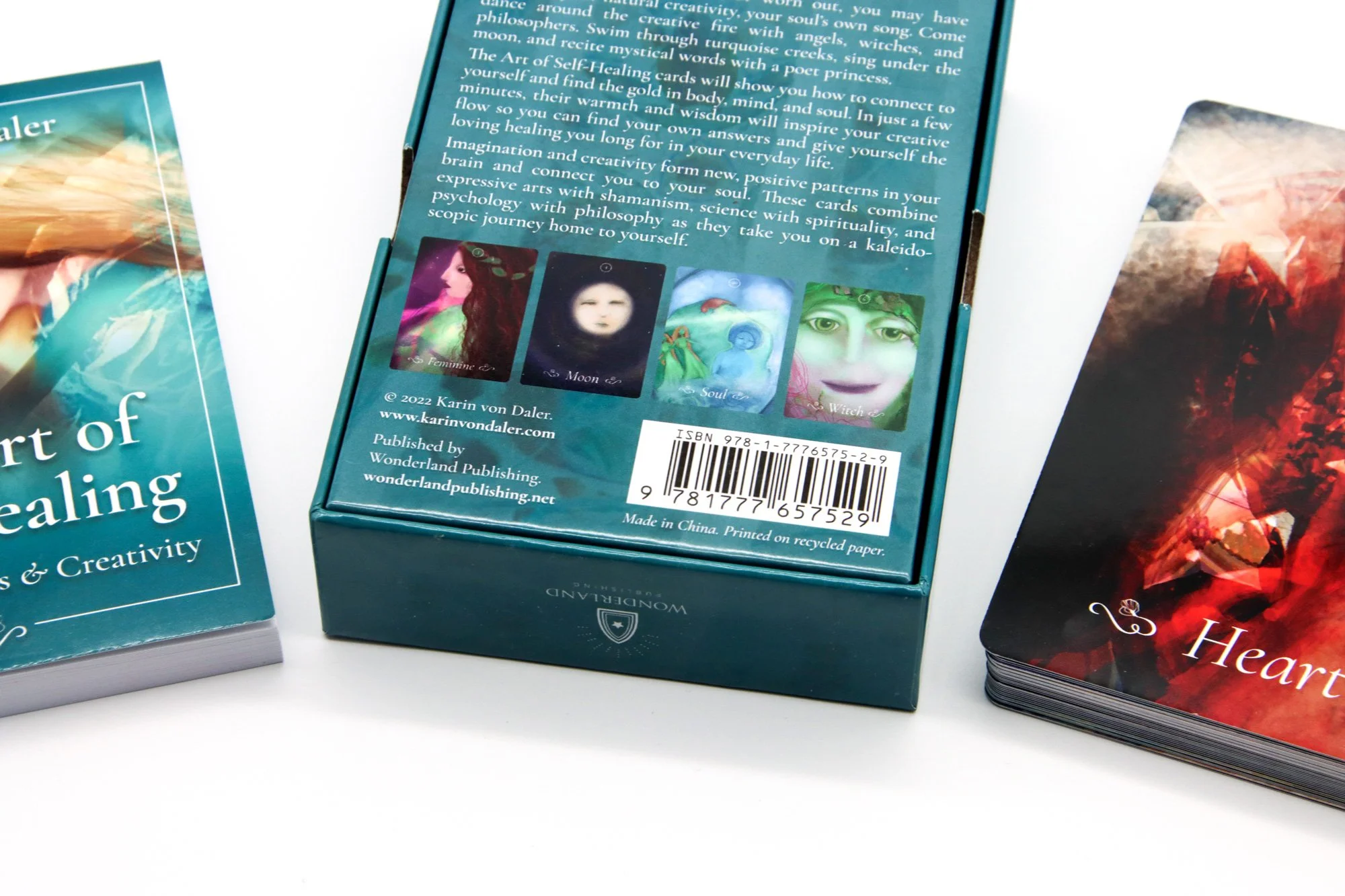
The Art of Self-Healing oracle card deck by Karin von Daler, with an ISBN barcode from Wonderland Publishing
Step 5: Get Your Deck Printed
Now comes the most exciting part, woohoo! Your deck is ready, and it’s time to get it printed!
Depending on the type of oracle deck you’re creating and how many copies you want to print the first round, you have two possibilities:
If your deck is fairly simple and you’d like to start with a small quantity, you may want to consider printing your deck on demand before placing an order for your first large print run. This can be a great option for small sellers in the beginning stages of growing their product-based business. Or you can print one copy at a time to test your deck before releasing it to a larger market.
For more complex card decks with special finishes, a full-length guidebook, non-standard box, or less common card size, getting your deck printed in bulk by a specialized card deck manufacturer may be the better choice. This option allows you to fully customize your deck, and you can expect better quality, too.
The minimum quantity for these types of productions usually starts at around 300–500 copies, so you’ll have to be prepared to invest several thousands upfront. However, if you already have an established audience to share your deck with, or if you’re launching your cards on Kickstarter, this is often the best choice as you’ll be able to grow your business faster at a lower cost per product.
If you have more questions about printing your card deck, check out our recently published article: 3 Ways to Print Your Own Oracle Card Deck
We also have a full list of recommended printers in the Deck Creators’ Launchpad! (And we’ll be happy to answer any questions you may have about the process of producing your deck, including figuring out the ideal printing solution for you!) :)
Want more support to make your dream of your own card deck happen?
Join us in the Deck Creators’ Launchpad & Community, and receive all the guidance, resources + support you need to create, launch and sell your own oracle, tarot, or affirmation card deck.